Testimonials from Our Stroke Community 

We understand how overwhelming it can feel to face mobility challenges after a stroke. That’s why we’ve designed our footwear to help you take confident steps toward independence. But don’t just take our word for it—hear from stroke survivors who’ve experienced the difference:

I was hesitant to try specialized footwear, but I’m so glad I did. My foot drop made walking exhausting and scary, but these shoes have made every step easier. I feel like I’m finally moving forward."

"After my stroke, I struggled to walk without feeling unsteady and frustrated. These shoes have been a game-changer—they’re comfortable, supportive, and make me feel secure when I walk. I’ve regained confidence I never thought I’d have again!"

Understanding the Walking Challenges After a Stroke


Walking challenges are common after a stroke, with conditions like foot drop, spasticity, and hemiparesis affecting mobility. Let’s explore these issues and how the right footwear can help.


Walking difficulties are a common challenge for individuals recovering from a stroke. According to a 2022 observational study, nearly half of those experiencing their first stroke struggled with walking immediately afterward.


While 65% to 85% of stroke survivors regain the ability to walk independently within six months, for some, these challenges persist. In fact, over 15% of individuals may continue to experience mobility issues beyond the six-month recovery period.


Best shoes for footwear

Common Walking Impairments After a Stroke Include: 

dictus band brace for drop foot picking up foot with shoe explanation

Features of Shoes Ideal for Stroke Patients

Choosing the right footwear after a stroke is essential for improving mobility, safety and overall comfort. The right shoes can help you walk more confidently, supporting greater independence and allowing you to stay active.

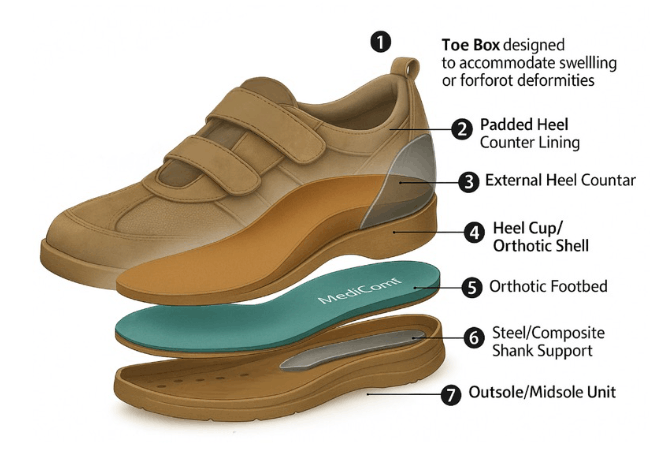
For stroke recovery, footwear should offer a comfortable fit, be lightweight for easier movement, provide flexibility for natural motion, and include slip-resistant soles to enhance stability and prevent falls. Tap each feature below to see why it matters.

Supportive shoe features for stroke recovery and balance
Built-in support, where it matters most
What it is

A firm, structured component at the back of the shoe that supports the heel and maintains foot alignment.

Why it matters

Stroke survivors often experience balance issues or muscle weakness. A sturdy heel counter helps stabilise the foot, preventing excessive movement and promoting proper gait mechanics.

What it is

A sole with a wider, flat design for a larger surface area of contact with the ground, combined with a textured, non-slip material for optimal grip.

Why it matters

A wider sole increases your base of support, distributing weight more evenly and improving balance — especially helpful if you experience spasticity or difficulty maintaining equilibrium. The anti-slip material adds a secure grip on various surfaces, minimising the risk of slipping.

What it is

A curved sole with an upward tilt at the toe, designed to create a smoother transition from heel strike to toe-off as you walk.

Why it matters

The upward tilt helps stop the front of the shoe catching on uneven surfaces — a real concern if you experience foot drop, muscle weakness or spasticity. By guiding the foot through a natural rolling motion, it reduces the effort each step takes, making walking safer and more fluid, especially with limited range of motion.

What it is

A shoe available in multiple width options to accommodate swelling, spasticity or orthotic devices.

Why it matters

A wider fit supports a more natural gait, reduces pressure points, and keeps the shoe comfortable and secure through the day — for better stability and mobility overall.

Best shoes for stroke

Regain Your Confidence Now Ready to Book — or Call for Clarification?

We're a registered DVA Medical Grade Footwear provider at all three clinics. Pick your nearest one:

Select your clinic
Book a Fitting →

Treatment Options for Stroke Recovery

Footwear is one part of a bigger picture. Most stroke recovery plans draw on a few different types of support — here's how each one typically helps, and where to find one.

Physiotherapy

A physiotherapist assesses your walking pattern, balance and strength, then builds a rehabilitation programme around what's affecting your mobility — whether that's foot drop, spasticity, or weakness on one side. They're also typically the one who advises whether a walking frame, stick or wheelchair is right for you at each stage of recovery, and how your footwear should work alongside it.

Visit Uplifting Physiotherapy →
Our sister clinic, for stroke recovery, balance and mobility physiotherapy.

Occupational Therapy

An occupational therapist focuses on day-to-day independence — assessing your home for fall risks and recommending equipment like handrails or a shower chair, and helping you adapt everyday tasks (dressing, cooking, getting around the house) to your current mobility. They often work alongside your physiotherapist rather than instead of them.

Find an OT near you →
Via Occupational Therapy Australia (OTA), the national body for occupational therapists.

Assistive Technology & Mobility Aids

Alongside footwear, a range of equipment can support safer, more confident movement after a stroke. What's right for you depends on your specific walking pattern and stage of recovery — your physio or OT can help you choose.

Ankle-Foot Orthosis (AFO)

A plastic brace worn inside the shoe, commonly used for foot drop to help lift the foot while walking.

Walking Frame

Offers a wide, stable base of support — often an early step in regaining independent walking.

Walking Stick

Adds one extra point of contact with the ground for balance, for those with milder stability needs.

Wheelchair

May be recommended for longer distances or earlier in recovery, alongside walking practice.

Grab Rails

Fitted in the bathroom or along hallways — an OT typically assesses your home and recommends placement.

Shower Chair

Reduces fall risk in the bathroom, one of the most common places for a fall at home.

Contact Us for Pricing

Swollen Feet (Edema)

Austin Orthopaedic Shoe- Ocean

Contact Us for Pricing

Everyday Comfort Shoes

Drew Walker Orthopaedic Shoe

Contact Us for Pricing

Men’s Footwear

Exceed Orthopaedic Shoe

Contact Us for Pricing

Men’s Footwear

Voyager Drew

Contact Us for Pricing

Common questions about footwear for stroke recovery

What should I look for in shoes after a stroke?
Look for a flat, slip-resistant sole for stability, a wide opening for easy on/off with one hand, a supportive heel counter, and a rocker sole if reduced ground clearance or foot drop is a factor. A professional fitting can confirm which features suit your walking pattern.
Are these shoes NDIS or DVA approved?
Several styles on this page, including the Drew Paige and Rose, are DVA-approved, and fittings can be arranged under NDIS or Home Care Package funding where eligible. Ask our team when you book your consult.
Can I get a professional shoe fitting for stroke recovery?
Yes — in-clinic fittings are available at our St Leonards, Newcastle (New Lambton) and Gosford clinics, where our team assesses your gait and walking pattern to recommend the right shoe.

Book a fitting near you

You might also find these useful